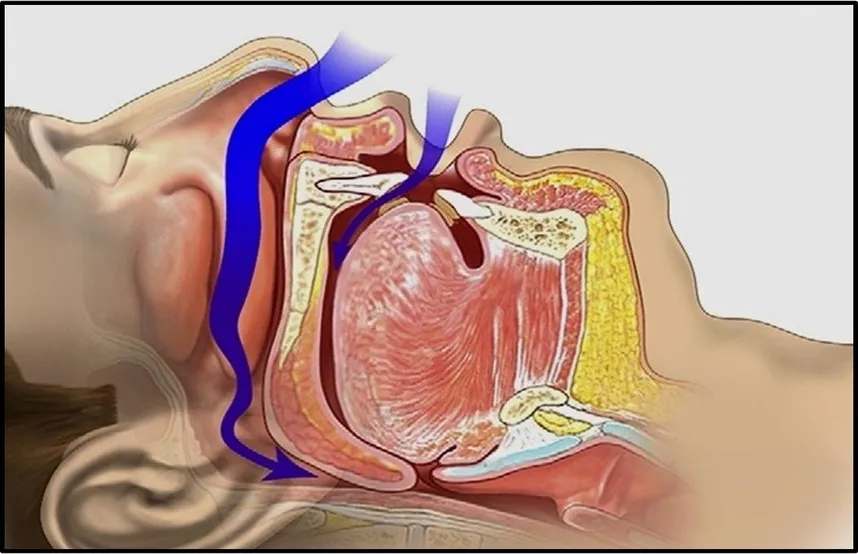
Sleep apnea (AP-ne-ah) is a common disorder in which you have one or more pauses in breathing or shallow breaths while you sleep.
Breathing pauses can last from a few seconds to minutes. They may occur 30 times or more an hour. Typically, normal breathing then starts again, sometimes with a loud snort or choking sound.
Sleep apnea usually is a chronic (ongoing) condition that disrupts your sleep and can put you at greater risk for other health issues.
Obstructive Sleep Apnea
Obstructive Sleep Apnea (OSA) is a situation in which the entire upper or lower airway is blocked causing air flow to stop.
Obstructive Sleep Apnea Event
Everyone
can agree that sleep is not only revitalizing and wonderful but also
critical to our health and wellbeing. Can you imagine how you would
feel if you didn’t get sleep? Most of us don’t want to even think
about the repercussions that lack of sleep can cause, but
unfortunately for many people, this issue is a reality. Find out if
your sleep problems could be due to sleep apnea and when you should
turn to our sleep specialist Dr. Inderpreet Atwal and the team at
Atwal Sleep & Wellness Center for help.
Are
You a Serious Snorer?
Does
your significant other complain that your snoring sounds like a
freight train? One of the most common signs of sleep apnea is loud,
chronic snoring that often gets worse when sleeping on your back.
Keep in mind that while snoring is a common symptom of sleep apnea it
doesn’t mean that everyone who snores actually has this condition.
The only way to find out is to get a proper medical diagnosis.
Other
Warning Signs of Sleep Apnea?
Another
frequent warning sign of sleep apnea is severe daytime sleepiness.
And we don’t just mean feeling a bit tired at the end of the day.
This sleepiness is constant and begins the minute you wake up and
continues throughout the day. You may find yourself falling asleep
behind the wheel of a car or falling asleep at your desk. If you are
noticing excessive fatigue then it’s time you talked to your doctor
about sleep apnea.
Treating
Sleep Apnea
There
are various ways in which Dr. Atwal and his sleep team can help you
get sleep apnea symptoms under control. A lot depends on the type and
severity of your sleep apnea. One of the most common types of sleep
apnea is obstructive sleep apnea (OSA), which can be treated through
lifestyle changes and continuous positive air pressure (CPAP)
therapy. CPAP utilizes a face mask that is placed over the nose and
mouth while you sleep to deliver pressured oxygen to keep airways
open throughout the night.
In
some cases, our team may recommend BiPAP (Bi-Level Positive Air
Pressure) over CPAP. While similar to the CPAP machine in the way
that it's used, it offers varying levels of air pressure to help
those with central sleep apnea. This equipment provides more
pressurized air when inhaling and less pressure when exhaling.
Whether
you suspect that you might have sleep apnea or you’ve been
diagnosed and would like to discuss treatment options, turn to the
Syracuse, NY, sleep apnea experts at Atwal Sleep & Wellness
Center. To schedule an evaluation, call (315) 214-5912 today.